What to Do When You Receive Your KuKirin Electric Scooter
Receiving Your KuKirin: The First Checks You Should Perform
Receiving a new KuKirin electric scooter is always exciting. Before heading out on your first ride, it is important to perform a few basic checks to make sure everything is assembled correctly and operating safely.
Taking a little time to inspect your scooter after delivery can help identify any issues related to shipping, assembly, or factory adjustments before they become a problem on the road.
Assemble Your KuKirin Correctly
The first step is to complete the assembly of your KuKirin according to the instructions provided by the manufacturer.
Depending on the model, this usually involves installing the handlebar, checking the folding mechanism, and making sure all components are properly aligned.
Take your time during assembly and avoid overtightening any bolts. A careful installation helps ensure a safer and more enjoyable riding experience.
Fully Charge the Battery Before Your First Ride
Before using your KuKirin for the first time, it is recommended to fully charge the battery.
Connect the charger to the wall outlet first, then plug it into the scooter. Allow the battery to reach 100% before riding.
This first full charge also allows you to verify that both the battery and charger are functioning correctly.
Perform a Complete Visual Inspection
Before turning on your scooter, walk around it and inspect every major component.
Check for scratches, cracks, shipping damage, missing bolts, loose accessories, or anything that appears unusual.
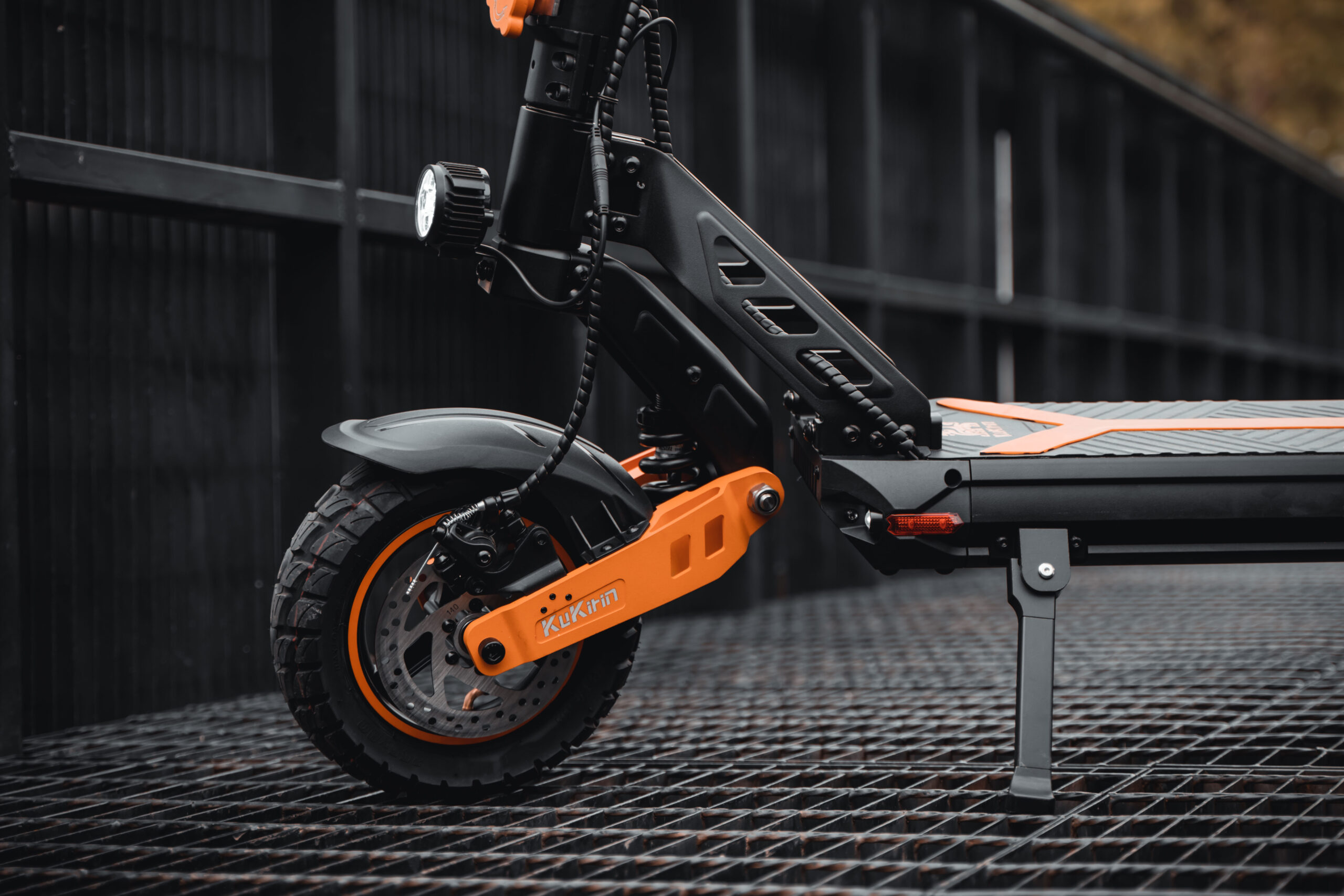
Pay particular attention to the frame, steering column, suspension arms, and folding mechanism. Although shipping issues are uncommon, a quick inspection can save time and prevent problems later.
Check and Tighten All Bolts
Transportation vibrations can sometimes loosen bolts during shipping.
Using the Allen key set included with your KuKirin, inspect all visible bolts and verify that they are properly tightened.
Pay special attention to the bolts located underneath the handlebar and around the steering column. These components experience significant stress while riding and should always be securely fastened.
The goal is not to overtighten the bolts, but simply to confirm that everything is secure.
Test the Braking System
Before your first ride, make sure the brakes operate correctly.
Fully squeeze each brake lever and release it several times.
Observe the brake calipers and brake pads while doing so. The pads should move toward the brake disc when the lever is pressed and return smoothly when released.
If your scooter uses mechanical brakes, verify that the brake cables tighten and relax correctly without sticking or excessive resistance.
A properly functioning braking system is essential before riding.
Inspect the Brake Discs
Take a moment to examine both brake discs.
They should be clean, flat, and free from major scratches, dents, or deformation.
A warped brake disc can cause vibration, unwanted noise, and reduced braking performance.
By spinning the wheel manually, you can often identify any visible side-to-side movement that could indicate a bent rotor.
Read the User Manual Carefully
It can be tempting to skip the manual and start riding immediately, but taking a few minutes to read it is highly recommended.
The manual contains important safety instructions, charging recommendations, maintenance guidelines, and specific information about your model.
Understanding these recommendations helps avoid common mistakes and extends the lifespan of your scooter.
How Should You Perform Your First Ride?
Your first ride should focus on gradually familiarizing yourself with the scooter.
Choose a safe, open area and start in the lowest speed mode available.
Perform several acceleration and braking cycles while paying attention to how the scooter responds.
This allows you to verify that the throttle, motors, brakes, tires, and overall electrical system are working correctly.
At the same time, you begin the natural bedding-in process of the brake pads and brake discs.
Progress Through the Different Speed Modes
Once you feel comfortable in the first riding mode, move to the next speed setting.
Continue performing controlled acceleration and braking tests while becoming familiar with the scooter’s power delivery.
Repeat this process for each available speed mode.
This gradual approach helps you safely learn the scooter’s behavior while ensuring that every mechanical and electronic component operates as expected.
Start Your KuKirin Journey the Right Way
Spending a few minutes inspecting your scooter before the first ride is one of the best habits you can develop as a Rider.
Proper assembly, a full battery charge, bolt inspection, brake testing, and a gradual first ride all contribute to a safer and more enjoyable experience.
Following these simple steps will help you get the most out of your new KuKirin electric scooter from day one while preserving its performance and reliability for the long term.
Leave a Reply