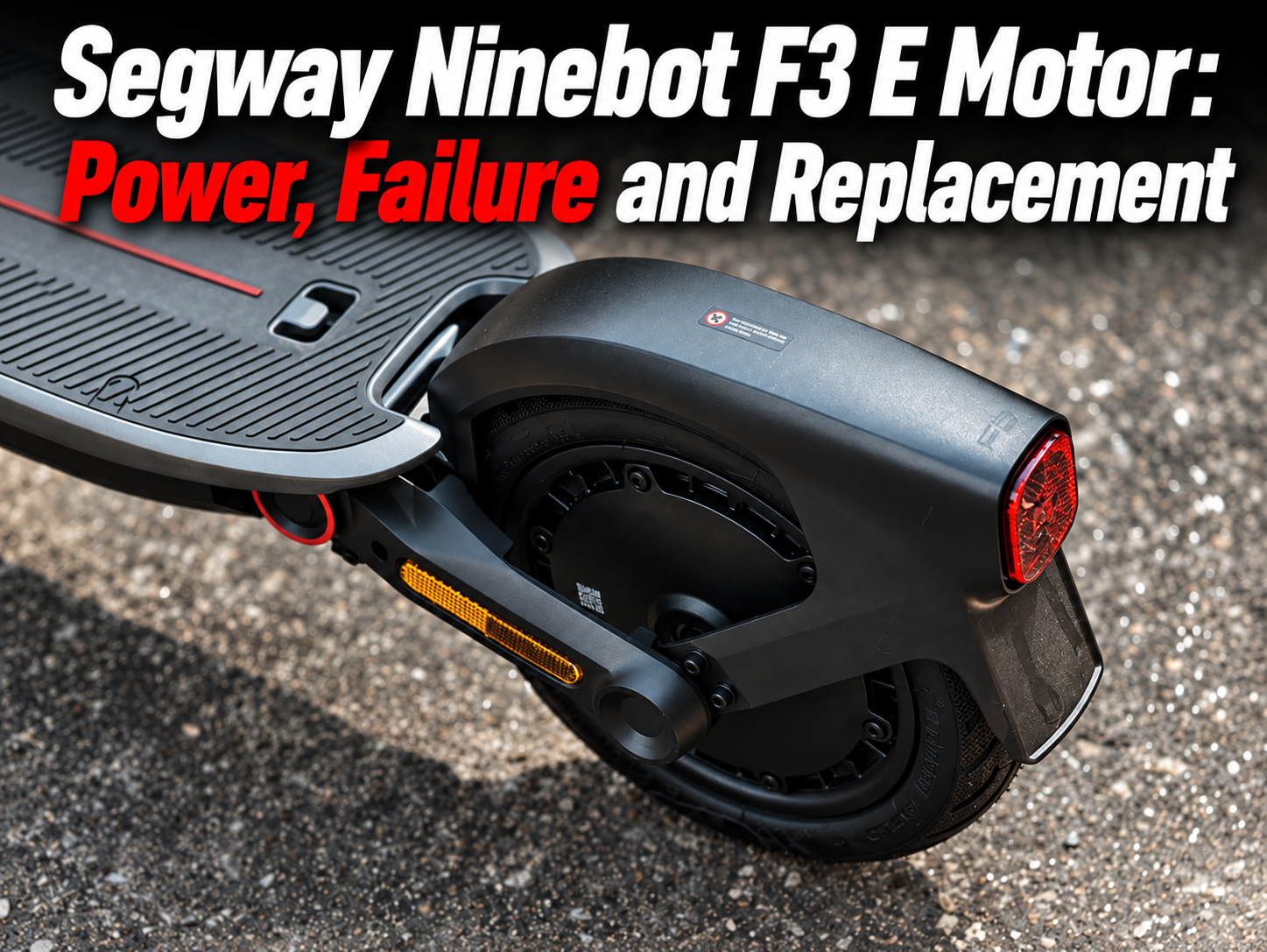
The Segway Ninebot F3 E motor is one of the main components responsible for the scooter’s performance. Integrated directly into the wheel, it converts electrical energy from the battery into the mechanical power required to move the scooter.
The original Segway Ninebot F3 E motor delivers 500W of nominal power and up to 1000W of maximum power. If the motor becomes damaged or develops a fault, the complete motor wheel can be replaced to restore normal operation.
In this guide, we explain the specifications of the Segway Ninebot F3 E motor, the main signs of failure, the checks to perform and how to replace it.
Segway Ninebot F3 E Motor Specifications
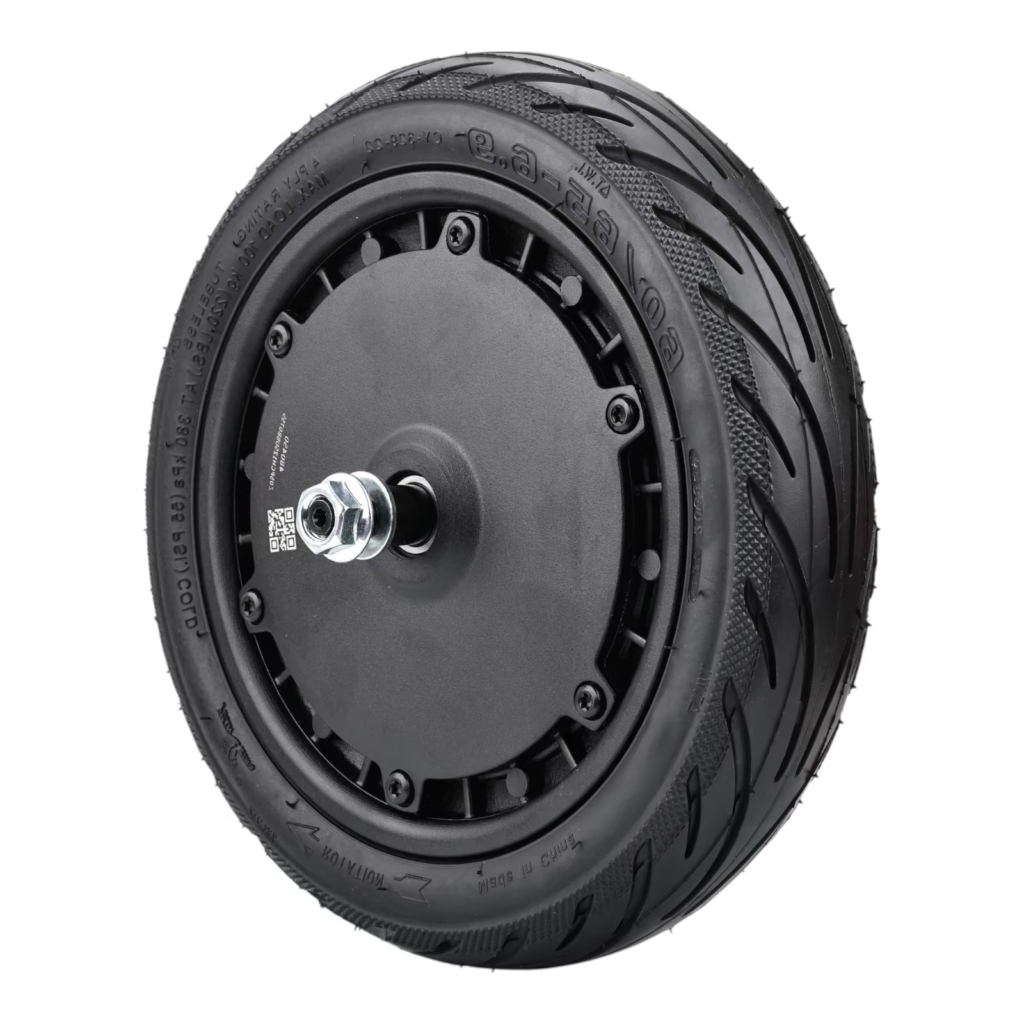
The Segway Ninebot F3 E motor is integrated into the wheel, allowing the complete assembly to be replaced when necessary.
Main specifications:
- Nominal power: 500W
- Maximum power: 1000W
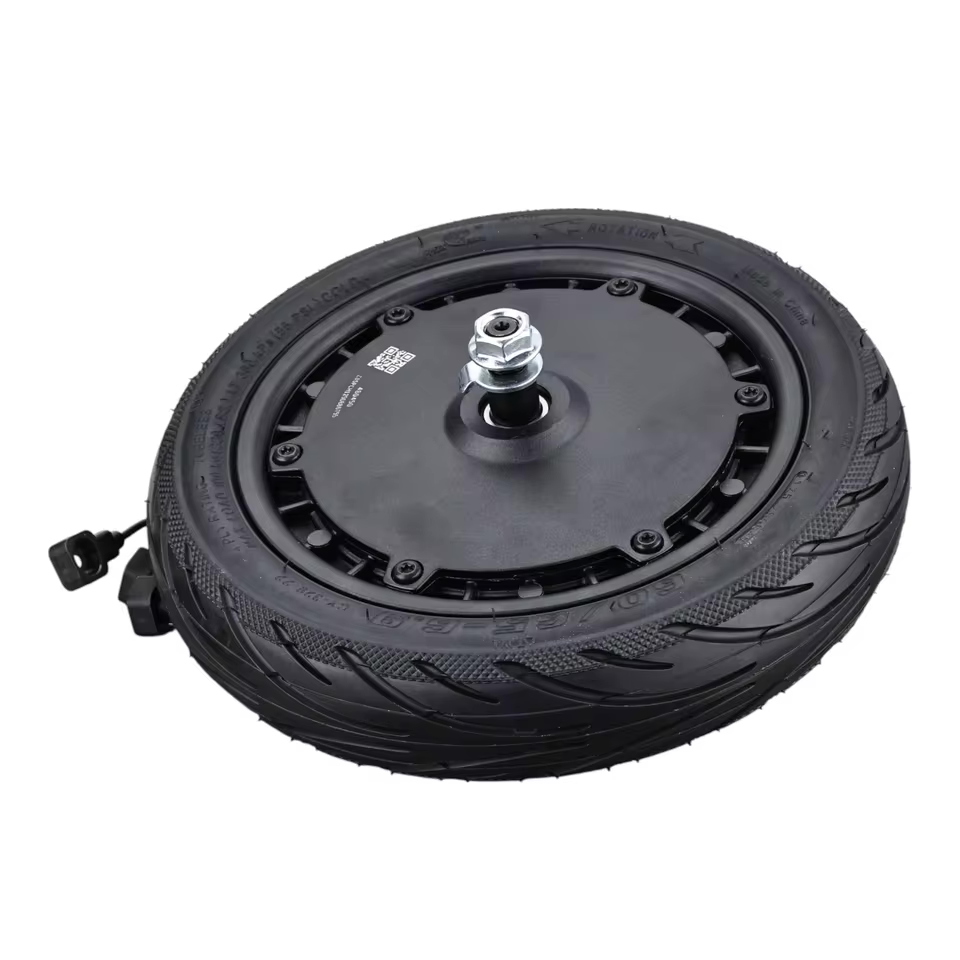
- Complete motor wheel
- Motor and tire included
- Direct replacement for the original motor
- Compatible with: Segway Ninebot F3 E
Using a complete motor wheel simplifies replacement because the motor is already integrated into the wheel assembly.
What Is the Role of the Segway Ninebot F3 E Motor?
The Segway Ninebot F3 E motor converts the electrical energy supplied by the battery and controller into rotational movement.
When the rider presses the throttle, the controller regulates the electrical power sent to the motor. The motor then drives the wheel and propels the scooter forward.
With 500W of nominal power and up to 1000W maximum power, the motor is designed to provide the power required for acceleration, everyday riding and climbing.
Its performance depends not only on the motor itself but also on other components, including:
- the battery;
- the controller;
- the throttle;
- the wiring;
- the electrical connectors.
A loss of power therefore does not automatically mean that the motor is defective.
Why Can a Segway Ninebot F3 E Motor Fail?
The Segway Ninebot F3 E motor is designed for regular use, but several factors can eventually cause damage or abnormal operation.
Possible causes include:
- repeated impacts;
- damaged motor wiring;
- damaged connectors;
- water or moisture infiltration;
- excessive mechanical stress;
- overheating;
- internal motor damage;
- wheel or bearing damage;
- electrical problems elsewhere in the scooter.
A strong impact around the motor wheel can also damage the wheel assembly even if the motor continues to operate initially.
Signs of a Faulty Segway Ninebot F3 E Motor
Several symptoms can indicate a problem with the Segway Ninebot F3 E motor.
Inspect the motor and its connections if you notice:
- unusual motor noises;
- vibrations from the motor wheel;
- irregular acceleration;
- sudden loss of power;
- significantly reduced performance;
- jerking during acceleration;
- a motor that no longer turns;
- abnormal resistance when rotating the wheel;
- intermittent motor operation;
- damaged motor cables or connectors.
Some of these symptoms can also originate from the controller, battery, wiring or another electrical component.
A diagnosis should therefore be performed before replacing the motor.
What Should You Check Before Replacing the Segway Ninebot F3 E Motor?
Before replacing the Segway Ninebot F3 E motor, inspect the components connected to it.
Start by completely switching off the scooter.
Then check:
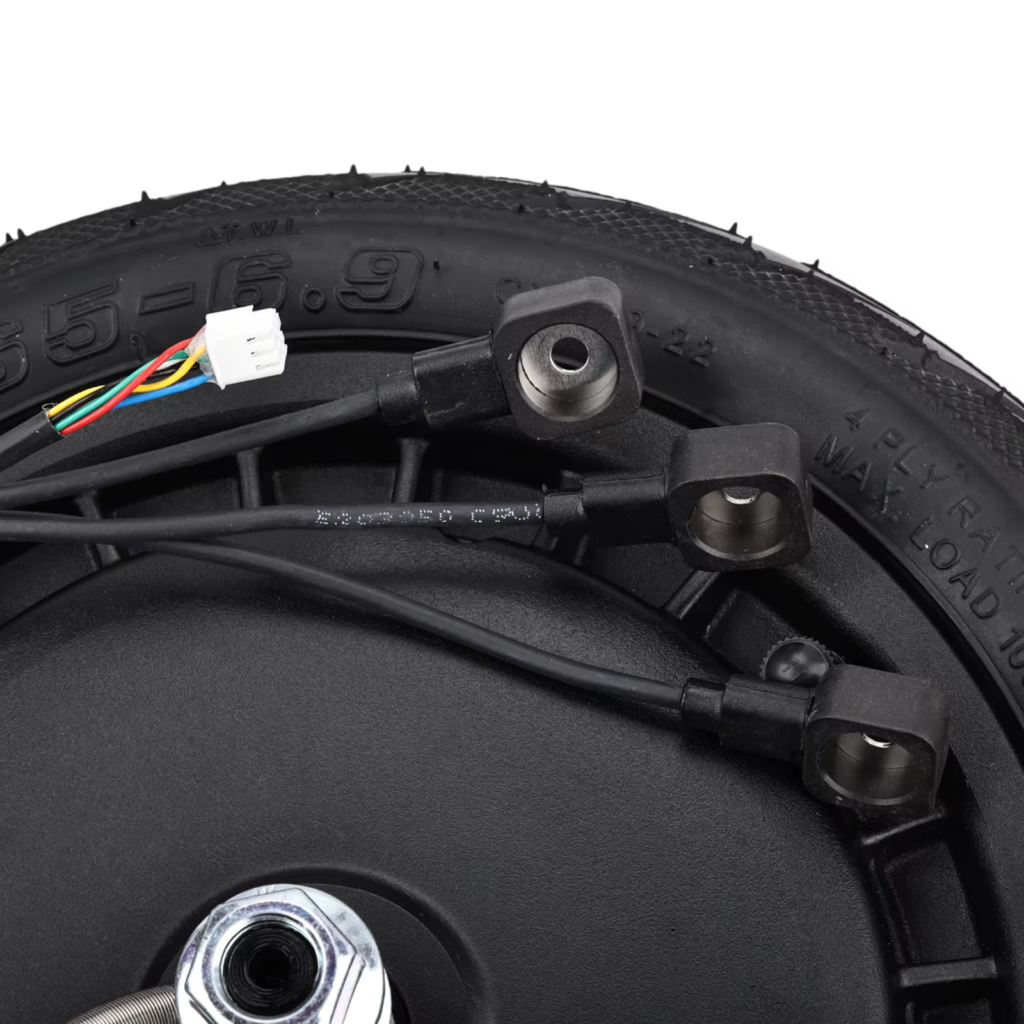
- the motor cable;
- the motor connector;
- the connector pins;
- the wiring for cuts or damage;
- the controller connections;
- the wheel for excessive play;
- the tire and wheel condition;
- whether the wheel rotates normally.
Look carefully for damaged, pinched or disconnected cables.
If the scooter displays an error code, identify the cause of the error before replacing parts unnecessarily.
When Should You Replace the Segway Ninebot F3 E Motor?
There is no fixed mileage at which the Segway Ninebot F3 E motor must be replaced.
Replacement should be based on its condition and diagnosis rather than mileage.
A replacement may be necessary when:
- the motor no longer operates;
- internal motor damage is confirmed;
- the motor produces persistent abnormal noises;
- the motor wheel has suffered significant impact damage;
- the motor cable is seriously damaged;
- abnormal operation remains after checking the controller and connections.
If the motor still operates normally and the complete wheel remains in good condition, preventive replacement is generally unnecessary.
How to Replace the Segway Ninebot F3 E Motor
Because the Segway Ninebot F3 E motor is integrated into the wheel, replacement involves removing the complete motor wheel assembly.
Before starting, completely switch off the scooter and place it securely on a stable support.
The general procedure involves:
- Accessing the motor cable and connector.
- Carefully disconnecting the motor from the scooter wiring.
- Freeing the motor cable from its routing points.
- Removing the wheel mounting hardware.
- Removing the original motor wheel.
- Positioning the new complete motor wheel correctly.
- Reinstalling and correctly tightening the wheel hardware.
- Routing the motor cable exactly as required.
- Reconnecting the motor connector.
- Checking that no cable is pinched, twisted or excessively stretched.
Pay particular attention to the cable routing. Incorrect positioning can cause the motor cable to rub against moving components and become damaged.
Video Tutorial: Segway Ninebot F3 E Motor Replacement
Replacing the complete motor wheel requires several disassembly steps. The video tutorial shows how to remove the original Segway Ninebot F3 E motor and correctly install the replacement.
Segway Ninebot F3 E Motor
If your original motor is damaged or faulty, the complete Segway Ninebot F3 E motor wheel provides a direct replacement solution.
The assembly includes the motor and tire, allowing the complete original motor wheel to be replaced.
What Should You Check After Replacing the Motor?
Before riding normally, carefully inspect the installation.
Make sure:
- the wheel is correctly positioned;
- all mounting hardware is correctly tightened;
- the motor connector is fully connected;
- the motor cable follows the correct routing;
- no cable is pinched;
- the tire rotates freely;
- there is no excessive wheel play;
- there are no abnormal noises.
With the scooter securely supported, check that the wheel rotates correctly.
Then perform an initial low-speed test in a safe area. Acceleration should be smooth and predictable, without unusual vibrations or noises.
How to Protect the Segway Ninebot F3 E Motor
The Segway Ninebot F3 E motor does not require replacement at a specific mileage, but regular checks can help identify problems before they become more serious.
Periodically inspect:
- the motor cable;
- the electrical connector;
- the wheel mounting hardware;
- the tire;
- the wheel for abnormal play;
- unusual noises or vibrations.
After a significant impact around the motor wheel, inspect the complete assembly before continuing normal use.
Maintaining the Segway Ninebot F3 E Motor
The Segway Ninebot F3 E motor, with 500W nominal power and up to 1000W maximum power, is a central component of the scooter’s drivetrain.
If you experience loss of power, abnormal noises, vibrations or irregular acceleration, first inspect the motor cable, connectors and related electrical components. If the motor itself is confirmed to be faulty, the complete motor wheel can be replaced.
For maintenance and repairs, choose Segway Ninebot F3 E parts tested and approved by the Riders community, selected for their compatibility and reliability.

Leave a Reply