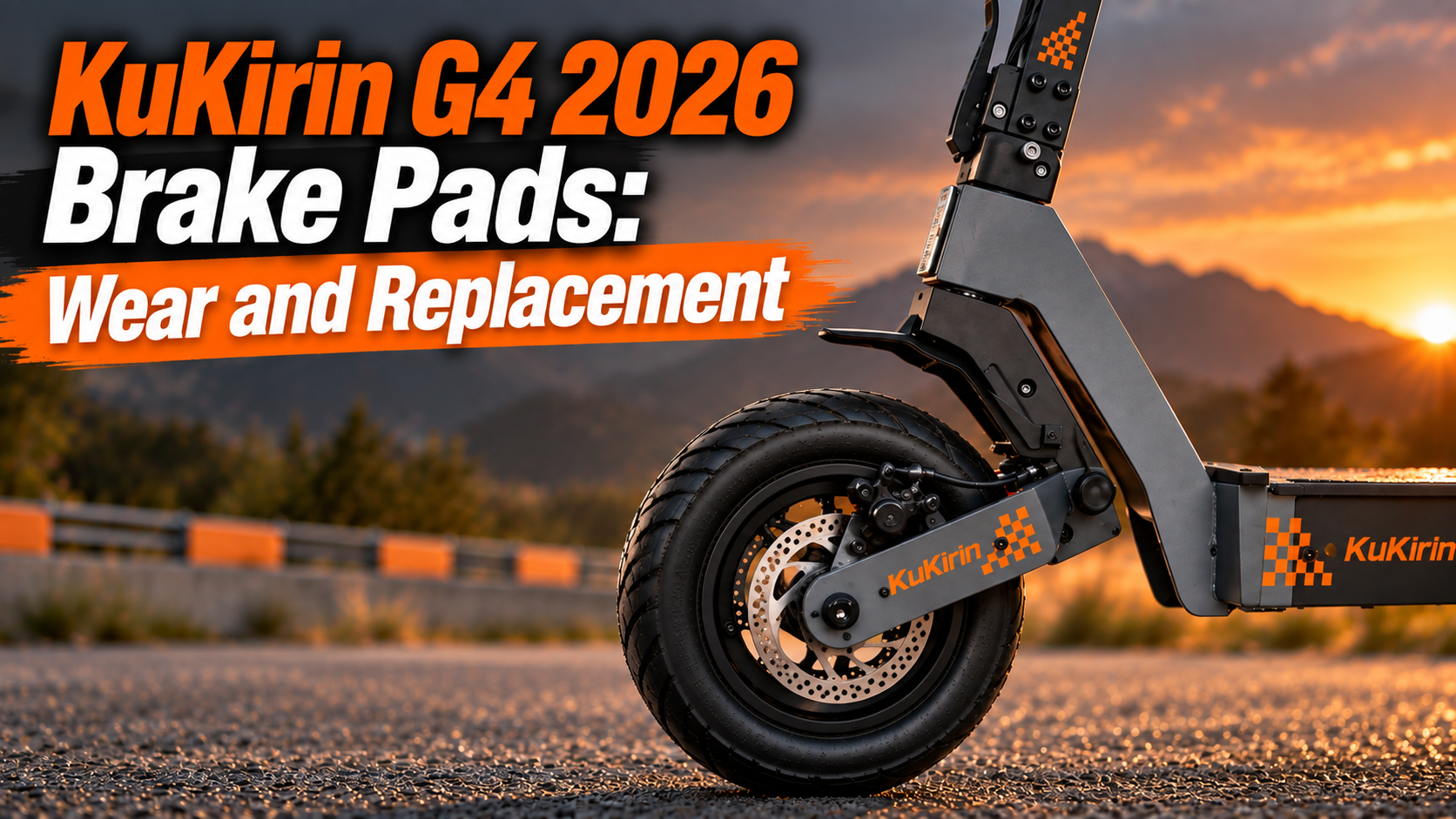
The KuKirin G4 2026 brake pads are essential wear parts of your scooter’s braking system. They create friction against the brake disc when you press the brake lever, allowing the wheel to slow down efficiently.
As you ride, the friction material on the KuKirin G4 2026 brake pads gradually becomes thinner. Regular inspection is therefore important to maintain consistent braking performance and prevent excessive wear from damaging the brake discs.
In this guide, we explain how to recognize worn brake pads, when to replace them and how to extend their lifespan.
KuKirin G4 2026 Brake Pads
If your brake pads are approaching 500 to 1,000 km of use, or if you notice that the friction material has become significantly thinner, inspect their condition and replace them when necessary.
What Is the Role of the KuKirin G4 2026 Brake Pads?
The KuKirin G4 2026 brake pads are installed inside the brake caliper.
When you press the brake lever, the pads are pushed against the brake disc. The friction created between these components reduces the rotation of the wheel and slows down the scooter.
A small amount of friction material is consumed every time you brake. Brake pad wear is therefore completely normal and replacement becomes necessary after a certain period of use.
When Should You Replace the KuKirin G4 2026 Brake Pads?
We generally recommend replacing the KuKirin G4 2026 brake pads between 500 and 1,000 km, depending on their condition and how you use your scooter.
This mileage is only a general guideline. Brake pad lifespan can vary considerably depending on:
- braking frequency;
- braking intensity;
- rider and load weight;
- riding conditions;
- frequent downhill riding;
- aggressive or sporty riding;
- the type of journeys you make.
For example, frequent urban riding with repeated stops can wear the brake pads faster than longer journeys requiring relatively little braking.
Mileage should therefore be used as a reference. The actual thickness and condition of the brake pad material remain the most important indicators.
How to Recognize Worn KuKirin G4 2026 Brake Pads
Several symptoms can indicate that your KuKirin G4 2026 brake pads are becoming worn.
Check your brake pads if you notice:
- reduced braking performance;
- longer braking distances;
- squeaking or grinding noises;
- metallic noises when braking;
- less progressive braking;
- unusual vibrations;
- very thin friction material;
- braking performance that remains poor after adjustment.
A visual inspection is one of the easiest ways to check how much friction material remains on the pads.
Why Should You Avoid Completely Worn Brake Pads?
Continuing to ride with excessively worn KuKirin G4 2026 brake pads can significantly reduce braking performance.
When the friction material becomes too thin, the metal backing of the brake pad can eventually come into direct contact with the brake disc.
This can cause:
- reduced braking efficiency;
- metallic grinding noises;
- scratches on the brake disc;
- premature brake disc wear;
- damage to other braking components.
Replacing your brake pads at the right time can therefore help protect your brake discs as well.
What Should You Check Before Replacing the Brake Pads?
Reduced braking performance does not necessarily mean that the KuKirin G4 2026 brake pads are the only problem.
Before replacing them, also inspect:
- the brake disc;
- brake caliper alignment;
- caliper mounting hardware;
- the general condition of the braking system;
- the wear of both brake pads.
If your brake caliper starts squeaking, first check the brake pads and brake disc.
If the noise continues while the pads and disc remain in good condition, the brake caliper itself may be starting to wear or develop a problem.
How to Replace the KuKirin G4 2026 Brake Pads
Before replacing the KuKirin G4 2026 brake pads, completely switch off the scooter and place it securely on a stable surface.
Access the brake caliper and carefully remove the old brake pads. While the pads are removed, inspect the brake disc and the inside of the caliper.
Install the new brake pads in the correct position.
After installation:
- Make sure the brake pads are correctly positioned.
- Check the alignment of the caliper with the brake disc.
- Check that all mounting hardware is properly tightened.
- Rotate the wheel manually.
- Make sure excessive friction does not prevent the wheel from rotating freely.
- Press the brake lever several times.
- Check that the braking system responds correctly.
Before returning to normal riding, perform several progressive braking tests at low speed in a safe area.
How to Extend the Lifespan of Your Brake Pads
Your braking habits have a direct impact on the lifespan of the KuKirin G4 2026 brake pads.
When riding conditions allow, use progressive braking rather than repeated hard braking.
Regularly check the alignment of the brake caliper and disc as well. A brake pad that constantly rubs against the disc while riding can wear much faster than normal.
Periodic visual inspections can also help identify uneven wear between the two pads.
Maintaining the Brakes on Your KuKirin G4 2026
The KuKirin G4 2026 brake pads are directly subjected to friction every time you brake, making them one of the components that should be inspected regularly.
We generally recommend replacing them between 500 and 1,000 km, depending on your riding style, braking intensity and, most importantly, the actual condition of the friction material.
For maintenance and repairs, choose KuKirin G4 2026 parts tested and approved by the Riders community, selected for their compatibility and reliability.
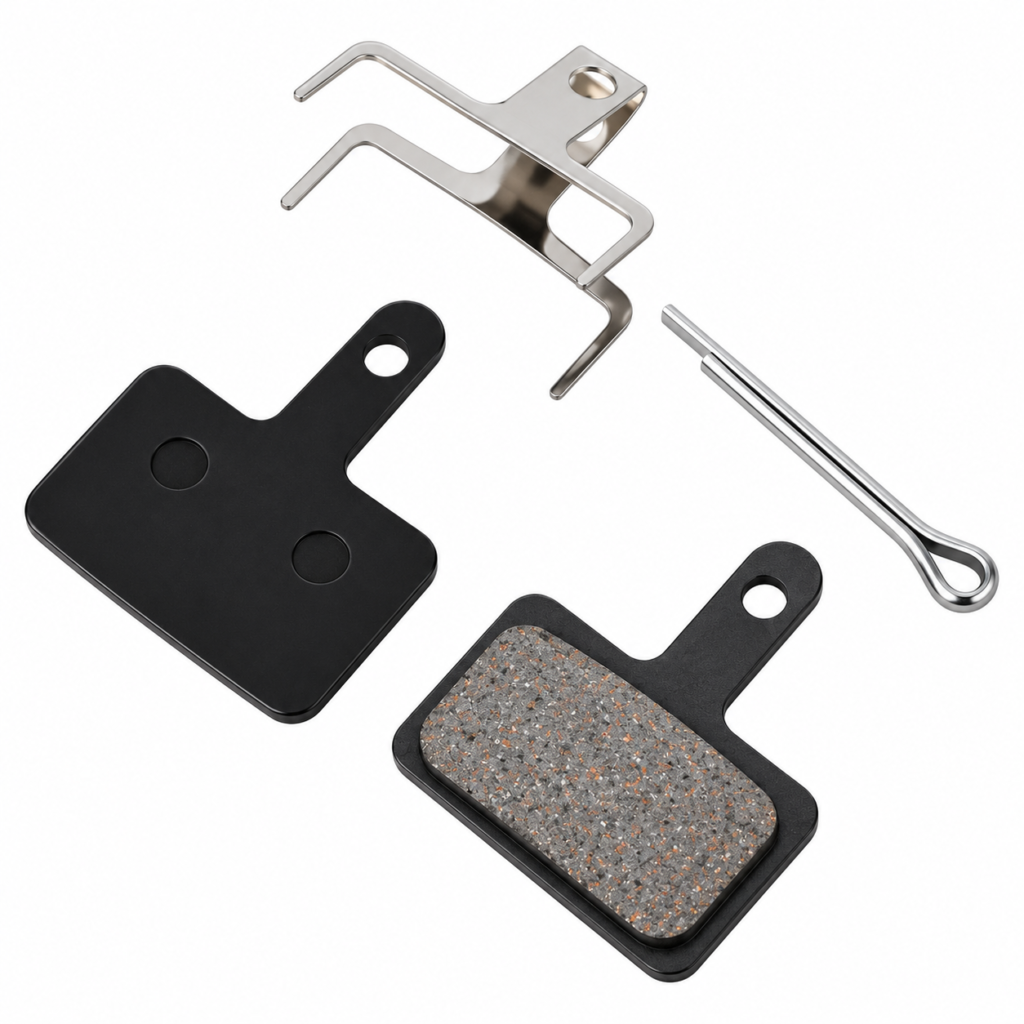
KuKirin G4 2026 Brake Pads
10.00€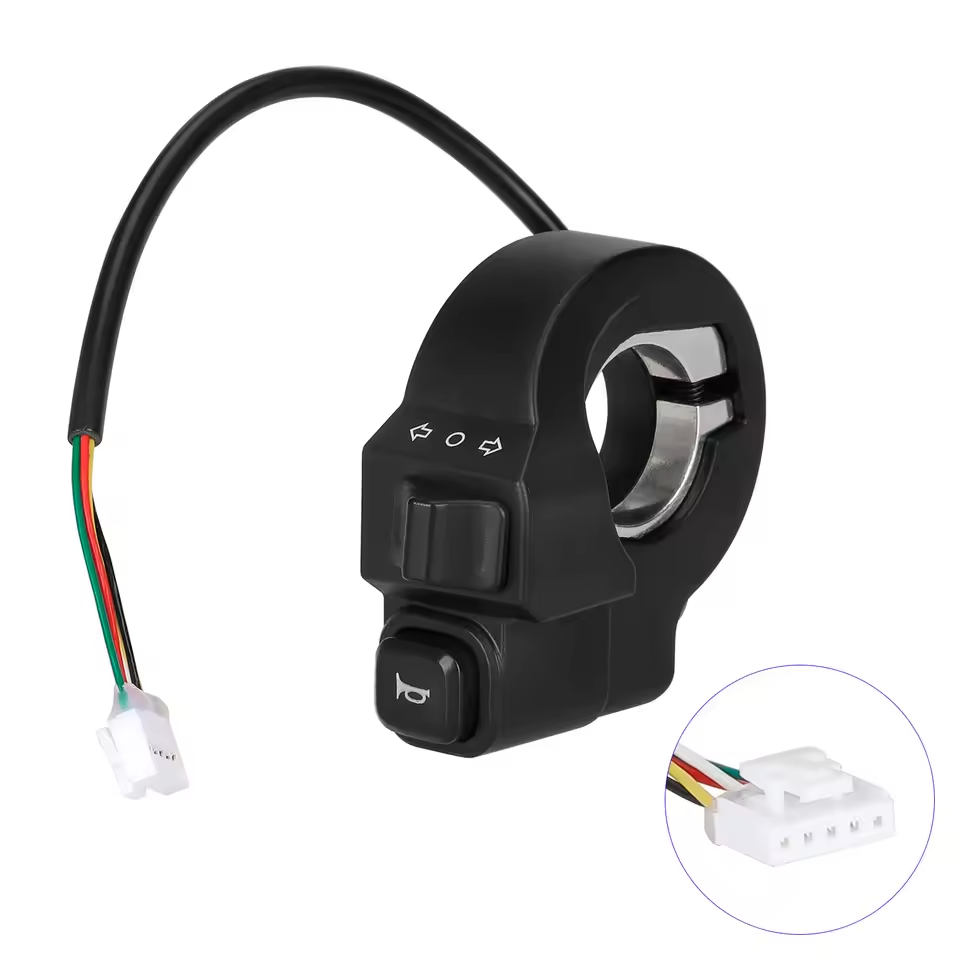
KuKirin G2/G4 Switch
20.00€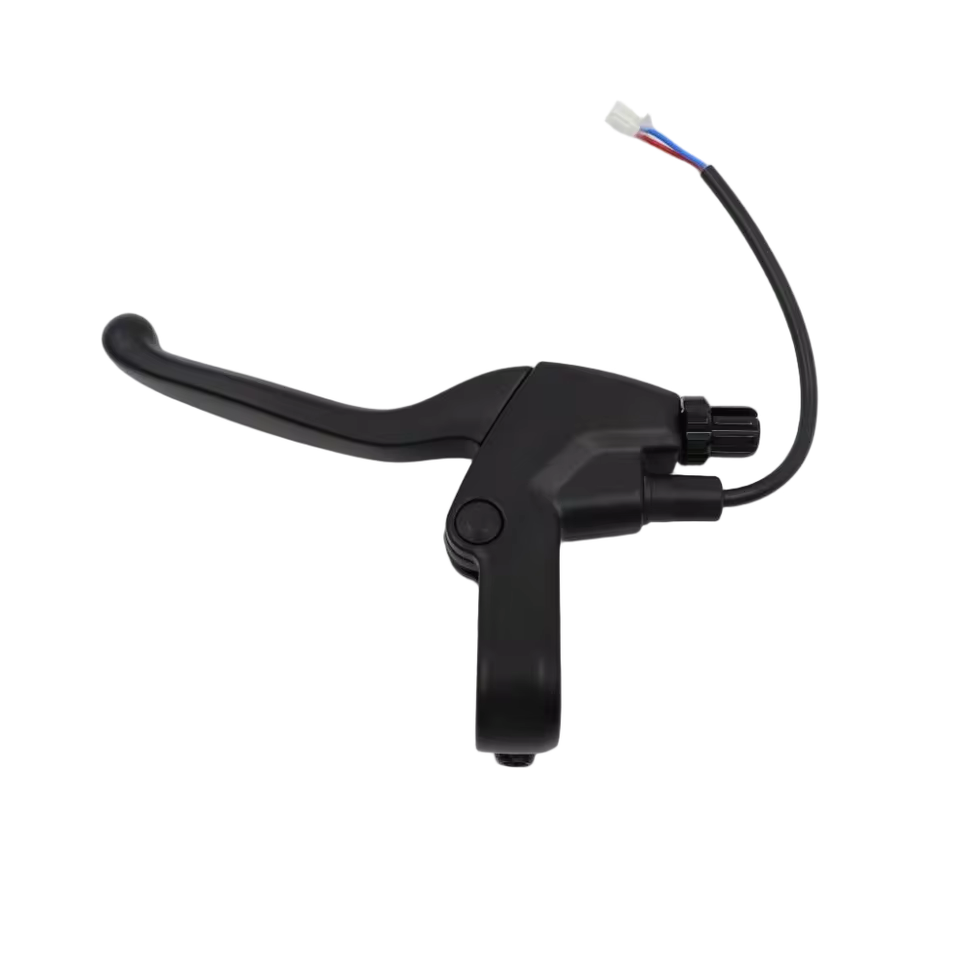
KuKirin G4 Left Brake Lever
25.00€
KuKirin G2/G3/G4 Throttle
20.00€
Leave a Reply