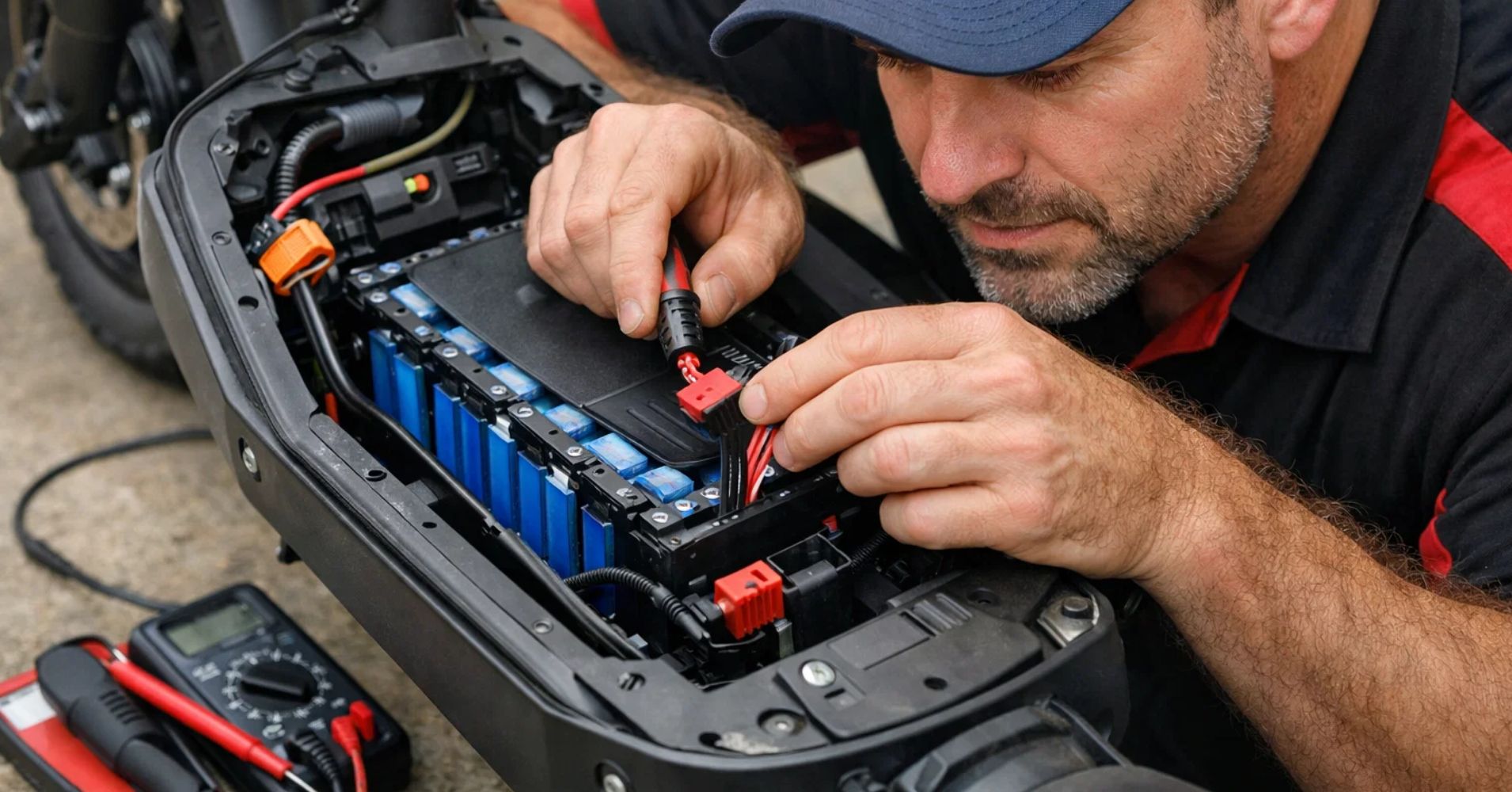
Why Is Electric Scooter Battery Maintenance Important?
The battery is one of the most important components of an electric scooter. It powers the motor, determines the available range, and directly affects overall performance.
A well-maintained battery can deliver reliable performance for several years. On the other hand, poor charging habits or improper storage conditions can quickly reduce range and accelerate battery degradation.
Taking care of your battery helps maximize riding time, reduce the risk of unexpected breakdowns, and avoid costly battery replacements.
How Does an Electric Scooter Battery Work?
Most modern electric scooters use lithium-ion batteries.
These batteries are made up of multiple cells that store electrical energy and release it when the scooter is in use.
Lithium-ion technology offers an excellent balance between weight, energy density, and lifespan. However, battery cells remain sensitive to extreme temperatures, deep discharges, and improper storage conditions.
Understanding how the battery works makes it easier to adopt good habits and maintain long-term performance.
When Should You Recharge Your Battery?
One of the most common mistakes is waiting until the battery is completely empty before recharging it.
To preserve lithium-ion cells, it is generally recommended to recharge the battery when the charge level drops to around 20–30%.
Regularly draining the battery to 0% places additional stress on the cells and can gradually reduce their overall capacity.
Keeping some charge in reserve helps extend battery lifespan and maintain better long-term performance.
Should You Charge Your Scooter to 100% Every Time?
For everyday use, charging to 100% is not always necessary.
Many riders choose to charge their battery to around 80–90% for daily commuting, which can help reduce long-term battery wear.
However, before a long ride or an extended trip, a full charge is perfectly acceptable and allows you to take advantage of the scooter’s maximum range.
Can You Leave the Charger Plugged In Overnight?
Although most modern chargers include protection systems against overcharging, it is generally best not to leave your scooter connected unnecessarily for many hours after charging is complete.
Once the charger indicator turns green and the battery is fully charged, disconnecting the charger is considered good practice.
This habit helps reduce unnecessary stress on both the battery and the charger.
Which Charger Should You Use?
Always use the original charger supplied by the manufacturer or an officially compatible replacement.
Every battery is designed around specific voltage and current requirements. Using an incompatible charger may lead to charging issues, premature battery wear, or in some cases permanent damage.
The original charger remains the safest option for maintaining the reliability of the charging system.
Should You Let the Battery Cool Down Before Charging?
Yes.
After riding, especially during warm weather or after demanding trips, the battery temperature may be significantly higher than normal.
It is recommended to wait approximately 30 to 45 minutes before starting a charging cycle. This allows the battery to return to a normal operating temperature.
Reducing thermal stress on battery cells helps improve long-term durability.
What Is the Ideal Temperature for Charging an Electric Scooter Battery?
Charging should ideally take place in a dry and temperate environment.
A room temperature between 10°C and 30°C (50°F to 86°F) generally provides the best conditions for maintaining battery health.
Charging in very cold or very hot conditions can negatively affect charging efficiency and accelerate battery aging.
In Which Order Should You Connect the Charger?
For maximum safety, it is recommended to plug the charger into the wall outlet first and then connect it to the scooter.
This procedure helps reduce certain electrical risks. In extremely rare situations, a faulty battery or damaged electronic component could generate an uncontrolled electrical discharge when connected.
By plugging the charger into the wall outlet first, the charger benefits from the building’s electrical protection systems, including circuit breakers and surge protection devices.
When charging is complete, reverse the process by disconnecting the charger from the scooter first and then unplugging it from the wall outlet.
This simple habit helps protect the charger, battery, and overall electrical system.
Why Shouldn’t You Place the Charger on the Scooter Deck During Charging?
It is not recommended to place the charger directly on the scooter deck while charging.
Chargers naturally generate heat during operation. When positioned on the deck, part of this heat can transfer directly to the battery and electronic components located inside the scooter.
This additional heat buildup is not ideal for battery longevity or electronic reliability.
For better heat dissipation, place the charger on a stable, dry, and well-ventilated surface next to the scooter.
This simple precaution helps reduce overheating risks and supports long-term battery health.
How Should You Store an Electric Scooter for Several Weeks or Months?
If you plan to store your scooter for an extended period, avoid leaving the battery completely empty.
The ideal storage charge level is typically between 50% and 70%.
The scooter should be stored in a dry location protected from humidity, freezing temperatures, and excessive heat.
It is also advisable to check the battery level every two or three months and recharge it slightly if necessary.
Can Hot or Cold Weather Damage the Battery?
Yes.
Extreme temperatures are among the biggest enemies of lithium-ion batteries.
Cold weather temporarily reduces available range and can decrease battery performance during rides.
High temperatures accelerate cell aging and can shorten the overall lifespan of the battery.
To protect your battery, avoid leaving your scooter inside a hot vehicle during summer or outdoors for extended periods during freezing winter conditions.
What Are the Signs of a Worn-Out Battery?
As batteries age, several symptoms may begin to appear.
You may notice a significant reduction in range, longer charging times, or increased heat generation during charging and use.
In more serious cases, the battery casing may swell or the electrical system may behave abnormally.
If any of these symptoms appear, it is recommended to have the battery inspected by a qualified professional.
How Can You Increase Your Electric Scooter’s Range?
Battery capacity is only one factor that affects range.
Smooth riding with gentle acceleration and controlled braking helps reduce energy consumption.
Maintaining the correct tire pressure also improves efficiency and minimizes energy losses.
Rider weight, terrain, wind conditions, and ambient temperature all influence the distance you can travel on a single charge.
How Long Does an Electric Scooter Battery Last?
Battery lifespan depends on its quality, usage patterns, and maintenance.
Under normal conditions, most lithium-ion batteries can provide reliable performance for approximately 2 to 5 years before a noticeable decrease in capacity occurs.
Riders who follow proper charging and storage practices often maintain good battery performance for many years.
How Can You Maximize Battery Lifespan?
The best way to extend battery life is to avoid complete discharges, limit exposure to extreme temperatures, use the correct charger, and store the scooter properly when not in use.
Simple habits practiced consistently can significantly improve battery longevity, maintain performance, and help you enjoy your electric scooter for years to come.
Leave a Reply