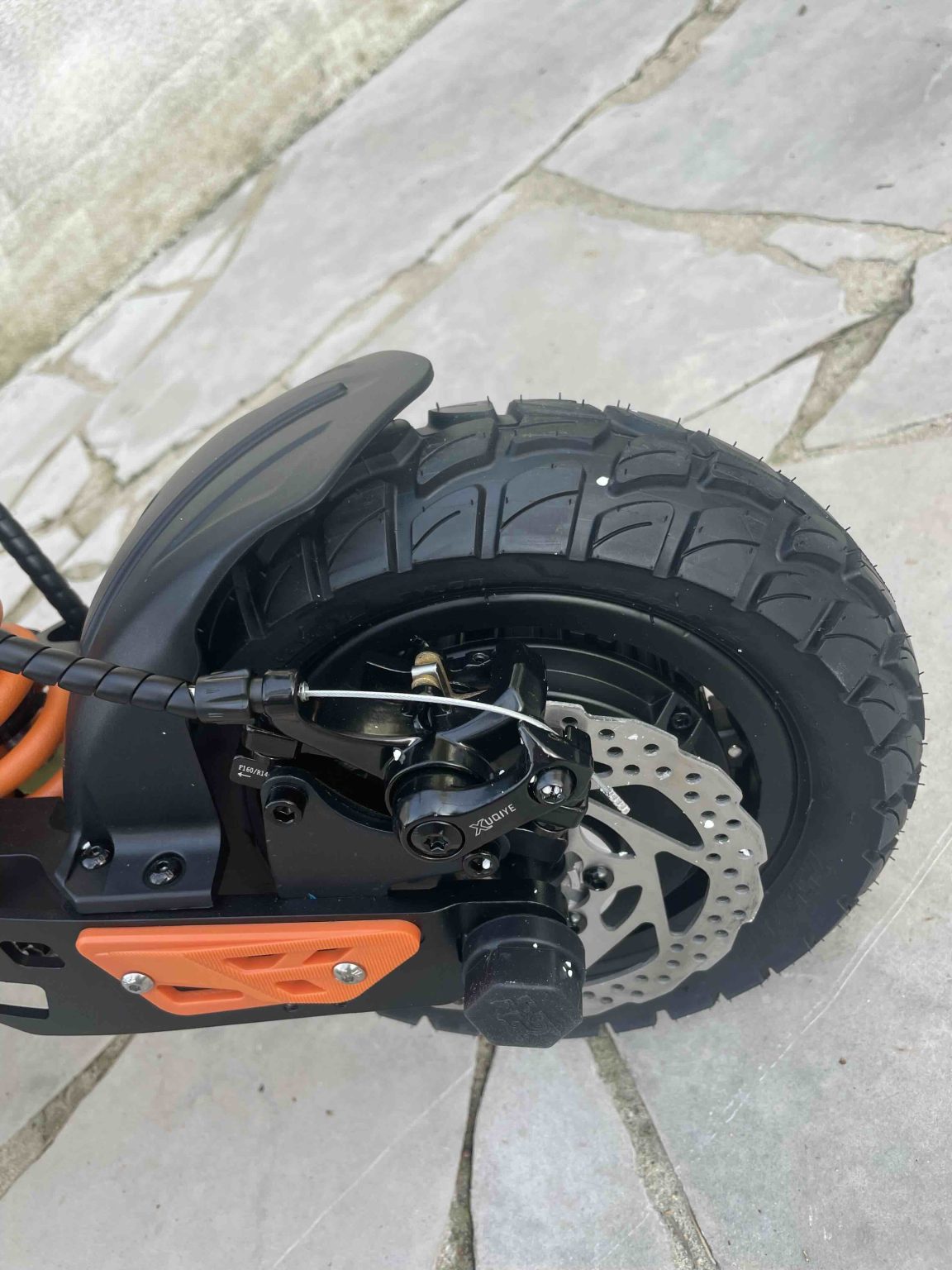
When should you replace the KuKirin G2 Master Brake Disc?
The KuKirin G2 Master Brake Disc is a critical component of the braking system and directly affects safety and deceleration quality. Unlike brake pads, it wears more slowly and the damage is often less visible, which leads many riders to delay replacing it.
However, knowing when to replace the KuKirin G2 Master Brake Disc is essential to maintain consistent braking, avoid vibrations, and protect the rest of the braking system.
The role of the KuKirin G2 Master Brake Disc
On the KuKirin G2 Master, the brake disc constantly works together with the brake pads during every braking action. It converts friction into controlled deceleration while dissipating the generated heat.
When the KuKirin G2 Master Brake Disc is in good condition, braking remains smooth, progressive and quiet. A worn or marked disc, on the other hand, causes reduced bite, lever vibrations and irregular braking, especially noticeable at high speed or downhill.
At what mileage should you replace the KuKirin G2 Master Brake Disc?
Contrary to common belief, the brake disc is not a lifetime component. On the KuKirin G2 Master, it is recommended to replace the brake disc starting around 1,000 miles, even if braking still feels acceptable.
This mileage corresponds to typical real world wear, especially after one or several brake pad replacements. Beyond 1,000 miles, the disc surface may become uneven and gradually reduce braking performance without obvious warning signs.
The disc should also be checked every time you replace the brake pads.
Signs of wear on the KuKirin G2 Master Brake Disc
Several symptoms indicate the KuKirin G2 Master Brake Disc is reaching the end of its life.
Braking may feel less smooth, with pulses or vibrations at the lever. Metallic noises or persistent squealing can appear. Visually, a worn disc often shows grooves, uneven surface marks or discoloration caused by overheating. In some cases, slight warping results in unstable braking.
Continuing to ride with a worn disc accelerates new pad wear and degrades the entire braking system.
Why replace the KuKirin G2 Master Brake Disc at 1,000 miles?
Replacing the KuKirin G2 Master Brake Disc around 1,000 miles maintains predictable and efficient braking. A new disc ensures uniform pad contact, reduces vibration and improves heat dissipation.
Waiting too long may cause premature pad wear, braking power loss and excessive stress on the caliper and mounting hardware.
Anticipating replacement is therefore a simple but essential step to preserve safety and braking durability.
Which brake disc to choose for the KuKirin G2 Master?
For perfect compatibility, it is recommended to use an original 140 mm KuKirin G2 Master Brake Disc. A properly sized disc guarantees correct thickness, precise caliper alignment and even pad wear.
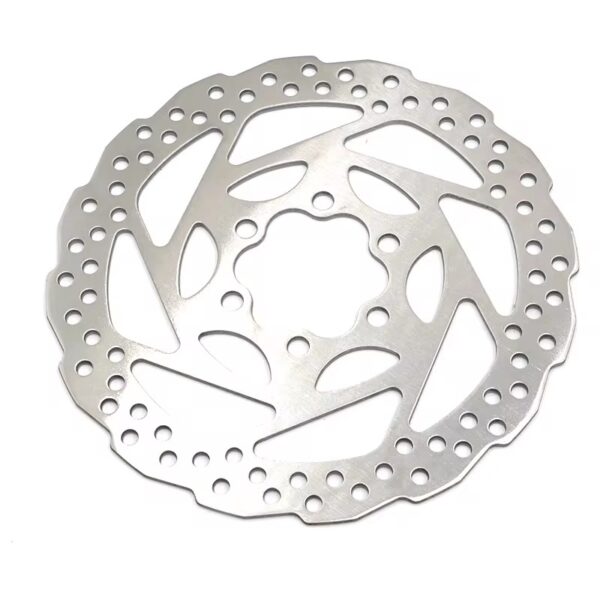
KuKirin G2 Master Brake Disc
KuKirin G2 Master Brake Disc
In stock
It also restores braking feel close to factory performance, with more consistency and less noise.
After replacement: braking adaptation
After installing the new KuKirin G2 Master Brake Disc, check the caliper alignment and pad condition. A short bedding in period is necessary so the surfaces adapt correctly.
During the first kilometers, use progressive braking. Once completed, braking performance returns to full efficiency and stability.
Preserve braking performance on your KuKirin G2 Master
The KuKirin G2 Master Brake Disc is a wear component that should not be ignored. Replacing it around 1,000 miles and checking it regularly ensures reliable, consistent and safe braking.
Maintain your KuKirin G2 Master safely
Regular maintenance of the braking system is essential for safe riding. Disc, pads and cables should be inspected to maintain optimal performance.
Discover KuKirin G2 Master parts tested and approved by the Riders community to keep your scooter in top condition.
Leave a Reply