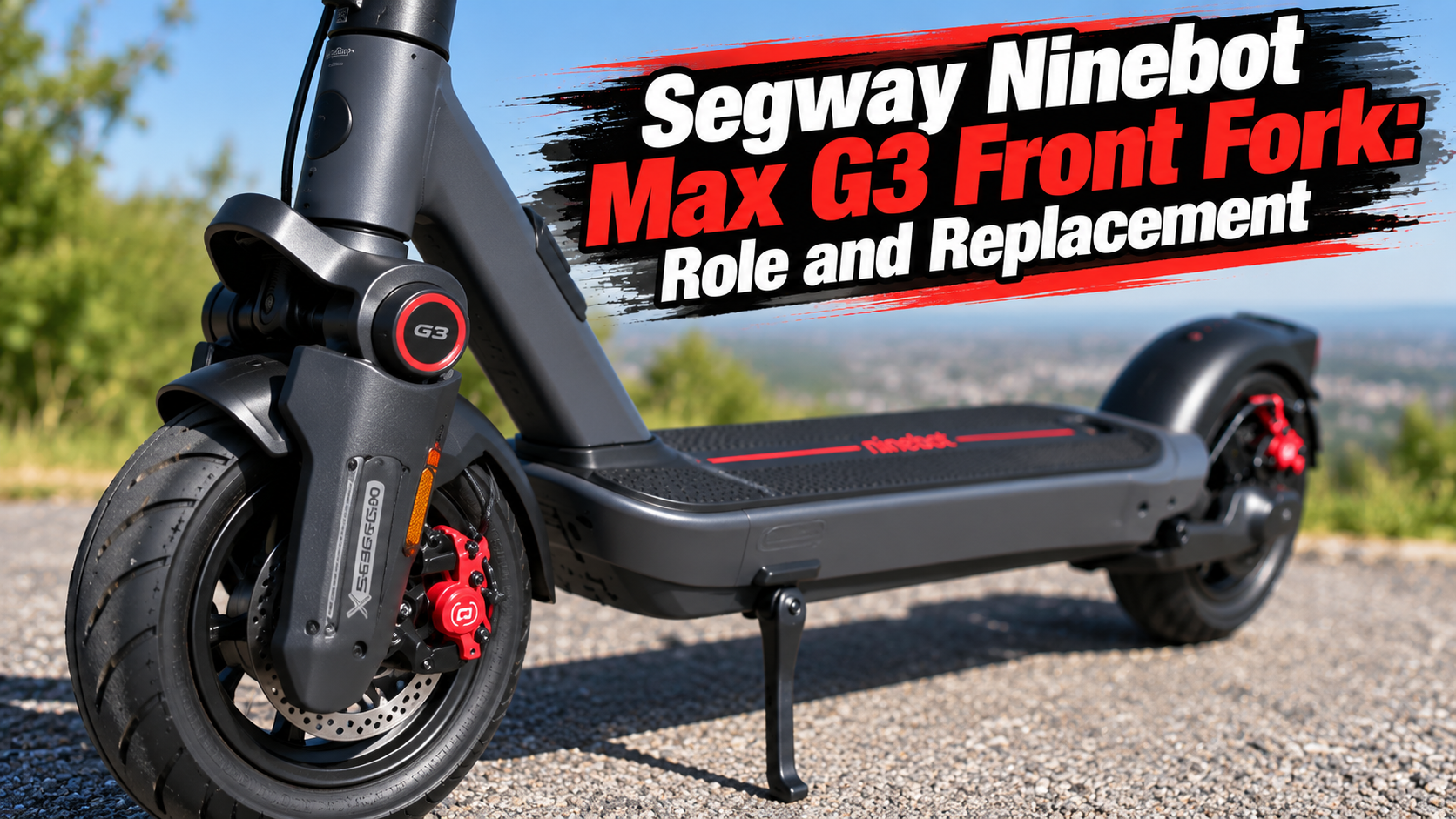
The Segway Ninebot Max G3 front fork is an essential part of the scooter’s front assembly. It supports the front wheel, contributes to steering and plays an important role in keeping the Max G3 stable and precise while riding.
A damaged, bent or misaligned Segway Ninebot Max G3 front fork can affect the scooter’s handling and make the steering feel less precise.
In this guide, we explain the role of the front fork, the main signs of damage, what to check before replacing it and how to replace it with our video tutorial.
What Does the Segway Ninebot Max G3 Front Fork Do?
The Segway Ninebot Max G3 front fork connects the front wheel to the steering assembly.
It performs several important functions:
- Supports the front wheel
- Allows the scooter to steer correctly
- Maintains front wheel alignment
- Contributes to overall stability
- Supports forces generated while riding and braking
- Helps manage impacts and vibrations from the road
The front fork is constantly subjected to forces when you steer, brake or ride over uneven surfaces.
Its condition should therefore be checked whenever you notice a change in the scooter’s steering or front-end behavior.
Why Can a Segway Ninebot Max G3 Front Fork Become Damaged?
The Segway Ninebot Max G3 front fork is not a typical wear part like a tire or brake pad.
There is therefore no specific mileage at which it should automatically be replaced.
However, damage can occur following:
- An impact with a curb
- A scooter fall
- A strong impact to the front wheel
- Hitting a pothole at speed
- An accident
- Repeated stress on the front assembly
- Loose fasteners
- Deformation of a steering component
After a significant impact to the front wheel, it is worth inspecting the fork even if no damage is immediately visible.
Signs of a Damaged Segway Ninebot Max G3 Front Fork
Several symptoms can indicate a problem with the Segway Ninebot Max G3 front fork.
Pay particular attention if you notice:
- The front wheel appears misaligned
- The handlebar is straight but the wheel is not
- Less precise steering
- Unusual handling when cornering
- Abnormal vibrations
- Play in the front assembly
- Knocking or unusual noises from the steering
- A visibly bent or deformed fork
- Unusual wheel rubbing
A sudden change in steering behavior after an impact should always be investigated before continuing to ride normally.
Check the Front Wheel Alignment
Wheel alignment is one of the first things to inspect.
Place your Segway Ninebot Max G3 on a flat surface and position the handlebar straight ahead.
Then look at the front wheel.
It should be correctly aligned with the handlebar and the scooter’s frame.
If the wheel appears slightly angled, do not immediately assume that the Segway Ninebot Max G3 front fork is bent. A loose component or another alignment issue may also be responsible.
A more complete inspection is therefore recommended before replacing the fork.
Check the Steering Before Replacing the Front Fork
Play in the handlebar does not automatically mean that the Segway Ninebot Max G3 front fork needs to be replaced.
Before ordering a new fork, also check:
- The different front-end fasteners
- The front wheel axle
- The steering components
- Any abnormal steering play
- Front wheel alignment
- Visible damage around the fork
Slowly turn the handlebar from left to right.
The movement should remain smooth without unusual resistance, knocking or binding.
These checks can help determine whether the problem actually comes from the front fork or another part of the steering assembly.
When Should You Replace the Segway Ninebot Max G3 Front Fork?
The Segway Ninebot Max G3 front fork should be replaced when its condition no longer allows the front wheel and steering geometry to remain correctly aligned.
Replacement may be necessary if:
- The fork is bent
- Part of the fork is cracked or broken
- The front wheel can no longer be correctly aligned
- The fork has been deformed following an impact
- Play remains after checking and tightening the other components
- Steering remains abnormal after the other front-end components have been inspected
There is no need to replace the front fork preventively after a specific number of kilometers.
The actual condition of the fork is the most important factor.
How to Replace the Segway Ninebot Max G3 Front Fork
Replacing the Segway Ninebot Max G3 front fork requires removing several components from the front assembly so the original fork can be removed and the replacement correctly installed.
Before starting, completely switch off your Max G3 and place it on a stable support.
During reassembly, pay particular attention to front wheel alignment, the tightening of the different fasteners and cable routing. No cable should be pinched, crushed or placed under excessive tension.
For the complete replacement process, follow our step-by-step video tutorial:
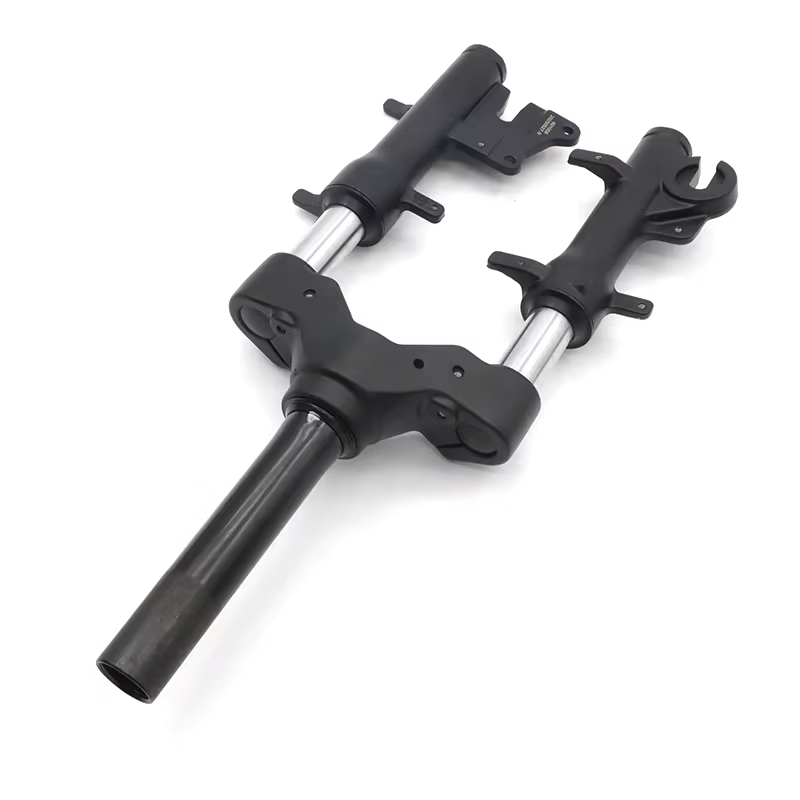
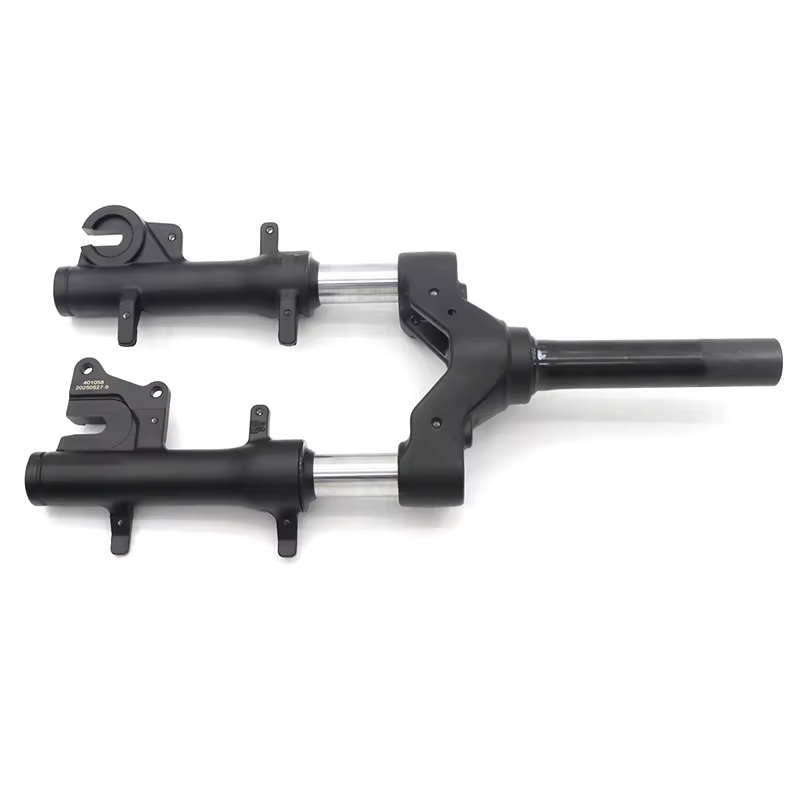
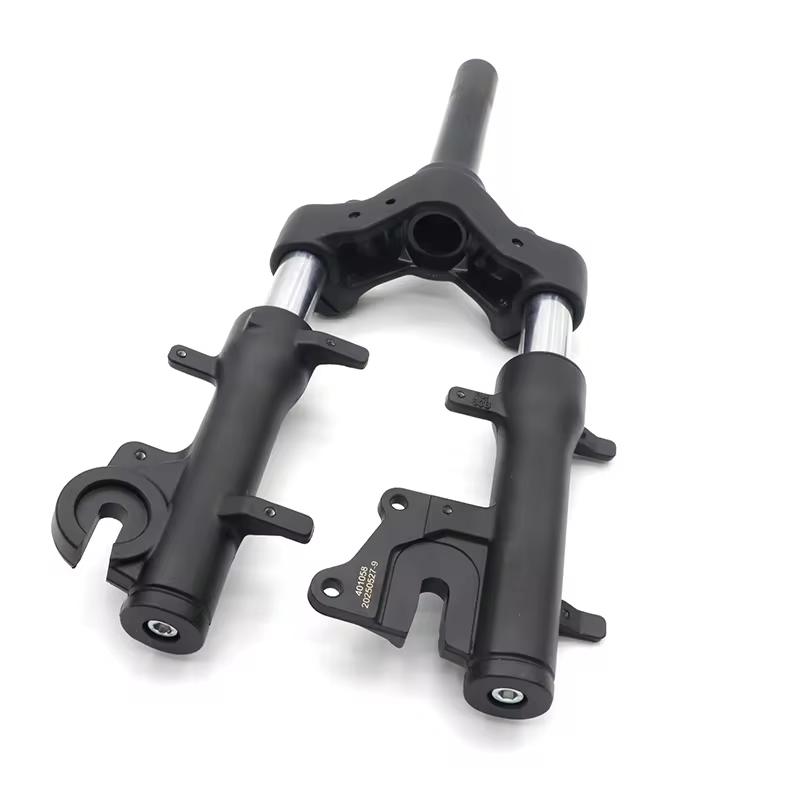
Segway Ninebot Max G3 Front Fork
If your original fork is bent, broken or damaged following an impact, replacing it can help restore correct front-end alignment and precise steering.
What Should You Check After Replacing the Front Fork?
Once the new Segway Ninebot Max G3 front fork has been installed, perform several checks before riding normally.
Start by making sure the front wheel is correctly centered and aligned.
Then check:
- Front wheel tightening
- Front fork fasteners
- Wheel and handlebar alignment
- Absence of abnormal steering play
- Smooth handlebar movement
- Correct cable routing
- Absence of unusual rubbing
Turn the handlebar fully to the left and right to make sure no cable is pulled, trapped or pinched.
Finally, perform your first test ride at low speed. The steering should feel stable, smooth and precise before returning to normal riding.
How to Protect the Front End of Your Max G3
The Segway Ninebot Max G3 front fork does not require periodic replacement, but regular checks can help identify a problem early.
Pay particular attention to the front assembly after a fall, impact or hard hit into a pothole.
If you suddenly notice steering play, reduced precision or a front wheel that appears misaligned, inspect the front end before continuing to use the scooter.
Maintaining the Segway Ninebot Max G3 Front Fork
The Segway Ninebot Max G3 front fork supports the front wheel and contributes directly to steering stability and precision.
There is no fixed replacement interval. However, a bent, cracked or damaged fork should be replaced when its condition affects the alignment or normal operation of the front assembly.
For repairs and maintenance, choose Segway Ninebot Max G3 compatible parts tested and approved by the Riders community.


Leave a Reply