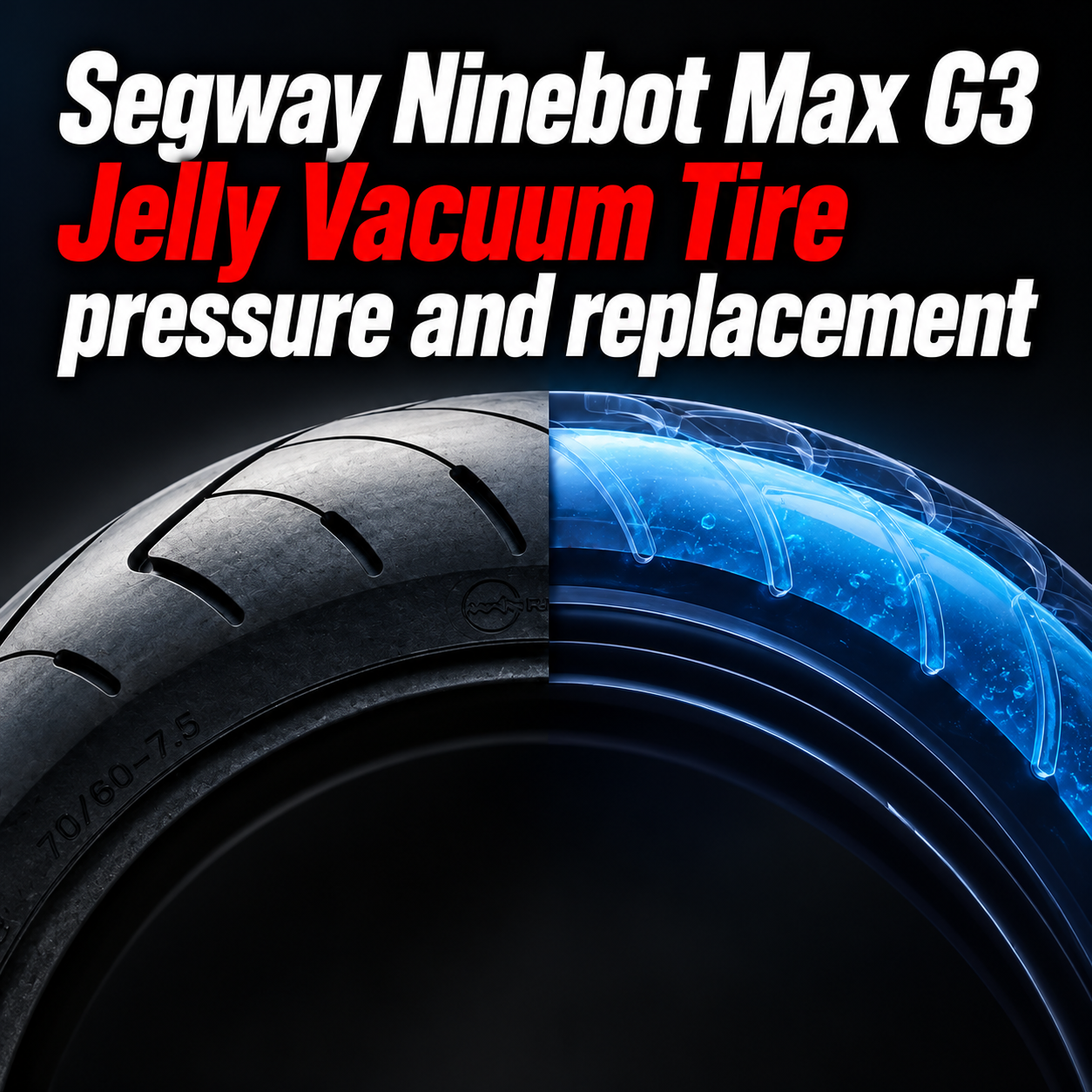
The Segway Ninebot Max G3 jelly vacuum tire is designed to provide reliable grip, riding comfort, and protection against certain small punctures during everyday journeys.
Featuring an 11-inch tubeless design with an internal self-sealing gel layer, this tire helps reduce air loss caused by small sharp objects while maintaining the comfort of a pneumatic tire.
Like any component exposed to road debris, friction, and changing riding conditions, the Segway Ninebot Max G3 jelly vacuum tire gradually wears down and may eventually need replacing.
In this guide, we explain how the self-sealing technology works, the most common signs of tire wear, how to maintain the correct tire pressure, and when replacement is necessary. You will also find a YouTube replacement tutorial and a compatible tire product listing.
What Is the Segway Ninebot Max G3 Jelly Vacuum Tire?
The Segway Ninebot Max G3 jelly vacuum tire is an 11-inch tubeless pneumatic tire equipped with an internal self-sealing gel layer.
The term vacuum tire is commonly used to describe a tubeless tire, meaning it does not require a separate inner tube to retain air.
Instead, the tire forms an airtight seal directly against the wheel rim.
The internal gel layer is designed to help seal certain small punctures caused by objects such as nails, thorns, or sharp road debris.
Its main advantages include:
- Tubeless construction: No separate inner tube is required.
- Self-sealing technology: Helps reduce air loss from certain small tread punctures.
- Riding comfort: The air-filled construction absorbs vibrations and road imperfections.
- Road grip: The tread provides traction on suitable road surfaces.
- Everyday practicality: Helps reduce the inconvenience of some minor punctures.
However, self-sealing technology does not make the tire completely puncture-proof. Large cuts, sidewall damage, and significant punctures may still require tire replacement.
Segway Ninebot Max G3 Jelly Vacuum Tire Specifications
The Segway Ninebot Max G3 uses 11-inch self-sealing tubeless tires designed for everyday urban riding.
| Specification | Details |
|---|---|
| Compatible scooter | Segway Ninebot Max G3 |
| Tire size | 70/60-7.5 |
| Tire diameter | 11 inches |
| Tire type | Tubeless pneumatic tire |
| Technology | Self-sealing jelly layer |
| Recommended pressure | 42–48 PSI (2.9–3.3 bar) |
| Wheel position | Front and rear, subject to replacement part compatibility |
Using the correct tire dimensions and maintaining the recommended pressure are essential for proper handling, riding comfort, and tire longevity.
How to Replace the Segway Ninebot Max G3 Jelly Vacuum Tire
Replacing a worn or damaged Segway Ninebot Max G3 jelly vacuum tire helps maintain proper grip, stability, and riding comfort.
Watch the YouTube video tutorial below to learn how to remove the original tire and install a compatible replacement.
Video Tutorial – Segway Ninebot Max G3 Jelly Vacuum Tire Replacement
Segway Ninebot Max G3 Jelly Vacuum Tire Replacement Part
The Segway Ninebot Max G3 jelly vacuum tire features a tubeless design with an internal self-sealing gel layer that helps reduce air loss from certain small punctures.
Designed for the Segway Ninebot Max G3, this replacement tire helps restore traction, riding comfort, and everyday reliability.
Before ordering, verify the tire dimensions and compatibility with your scooter.


Segway Ninebot Max G3 Jelly vacuum tire (70/60–7.5)
Segway Ninebot Max G3 Jelly vacuum tire (70/60–7.5)
When Should You Replace the Segway Ninebot Max G3 Jelly Vacuum Tire?
Even with self-sealing technology, tires remain wear components that require regular inspection.
Several signs can indicate that replacement is necessary.
1. The Tire Tread Is Worn
The tread gradually wears down as the scooter accumulates mileage.
When the grooves become shallow, the tire may lose grip, particularly on wet roads.
If the tread reaches its wear indicators or the manufacturer’s recommended replacement limit, the tire should be replaced.
2. The Tire Loses Air Frequently
A tubeless jelly tire should maintain its pressure when the tire, valve, and rim seal are in good condition.
If you regularly need to reinflate the tire, the problem may be caused by:
- A puncture that the gel cannot seal.
- A damaged valve.
- Air leakage around the tire bead.
- A cut or damaged tire sidewall.
- Deterioration of the tire structure.
Persistent pressure loss should be investigated before continuing to ride.
3. The Tire Has Visible Cuts or Cracks
Road debris, impacts, and aging can cause cracks or cuts in the rubber.
Damage to the sidewall is particularly concerning because this area plays an important role in supporting the tire.
A tire with deep cuts, bulges, or exposed structural material should be replaced.
4. The Tire Has Become Deformed
A tire may develop irregularities after a significant impact, prolonged underinflation, or structural damage.
If you notice unusual vibrations, a visible bulge, or irregular tire rotation, stop using the scooter until the wheel and tire have been inspected.
5. The Tire Has Repeated Punctures
Although the internal gel layer can seal certain small punctures, repeated damage may eventually affect tire reliability.
If the tire continues losing pressure or has suffered significant damage, replacement may be safer than attempting further repairs.
How Does the Self-Sealing Jelly Technology Work?
The Segway Ninebot Max G3 jelly vacuum tire uses an internal sealing layer designed to limit air loss after certain punctures.
When a small sharp object penetrates the tread, the gel can flow around the puncture opening and help prevent air from escaping.
This technology is particularly useful for everyday urban riding, where small pieces of glass, thorns, or other debris may be present on the road.
However, the effectiveness of the sealing layer depends on several factors, including puncture size, location, and tire condition.
It is important to understand that:
- Small punctures in the tread area may seal automatically.
- Sidewall punctures are generally not covered by the same level of protection.
- Large cuts may exceed the sealing capability of the gel.
- A sealed puncture does not eliminate the need to monitor tire pressure.
Even if the tire appears to have sealed itself, check its condition and pressure regularly.
How to Maintain the Segway Ninebot Max G3 Jelly Vacuum Tire
Proper tire maintenance helps preserve grip, riding comfort, and tire lifespan.
Check Tire Pressure Regularly
Maintaining the correct pressure is one of the most important steps in tire maintenance.
For the Segway Ninebot Max G3, the recommended tire pressure is 42–48 PSI (2.9–3.3 bar).
Underinflated tires can increase rolling resistance, accelerate wear, and make the scooter less stable.
Overinflation can reduce comfort and alter the tire’s contact with the road.
Check tire pressure when the tires are cold and use a reliable pressure gauge.
Inspect the Tread
Check the tire surface regularly for embedded objects, unusual wear, cuts, or visible damage.
Pay particular attention after riding on roads containing glass, gravel, or construction debris.
Avoid Riding With Low Tire Pressure
Riding with insufficient pressure can damage the tire sidewalls and increase the risk of the tire bead losing its seal against the rim.
It may also increase the likelihood of damage when crossing potholes or obstacles.
Clean the Tire Carefully
Use water and a soft brush to remove dirt and road debris.
Avoid aggressive solvents or cleaning products that may damage rubber components.
Check After Significant Impacts
After hitting a pothole, curb, or other obstacle, inspect the tire and wheel for damage.
Even if the tire does not immediately lose pressure, an impact may affect the rim, bead seal, or tire structure.
FAQ: Segway Ninebot Max G3 Jelly Vacuum Tire
What Is a Segway Ninebot Max G3 Jelly Vacuum Tire?
It is an 11-inch tubeless pneumatic tire with an internal self-sealing gel layer designed to help prevent air loss from certain small tread punctures.
Does the Segway Ninebot Max G3 Jelly Vacuum Tire Need an Inner Tube?
No. A tubeless tire does not use a separate inner tube. It forms an airtight seal directly against the wheel rim.
Is the Segway Ninebot Max G3 Jelly Vacuum Tire Puncture-Proof?
No. The internal gel can help seal certain small punctures, but it cannot prevent all tire damage. Large cuts, sidewall punctures, or structural damage may still require replacement.
What Is the Recommended Tire Pressure for the Segway Ninebot Max G3?
The recommended pressure is 42–48 PSI (approximately 2.9–3.3 bar). Maintaining the correct pressure helps preserve grip, riding comfort, and tire lifespan.
Can I Replace the Segway Ninebot Max G3 Jelly Vacuum Tire Myself?
Replacement may be possible with suitable tools and experience working with tubeless tires. However, installation can be difficult, particularly when seating the tire bead correctly. Professional assistance is recommended if you are unfamiliar with tire replacement.
Why Does My Segway Ninebot Max G3 Tire Keep Losing Air?
Possible causes include a puncture that has not sealed, a damaged valve, a leaking bead seal, or tire damage. Inspect the tire and wheel to identify the source of the leak.
Can I Ride With a Small Puncture in a Jelly Tire?
A small tread puncture may seal automatically, but you should verify that the tire maintains the correct pressure and has no structural damage. Do not continue riding if air loss persists.
How Often Should I Check the Tire Pressure?
Check the pressure regularly, ideally before longer journeys and whenever the tire appears underinflated. Always use the manufacturer’s recommended pressure.
Are All Segway Ninebot Tubeless Tires Compatible With the Max G3?
No. Tire dimensions, construction, and wheel compatibility can vary between Segway Ninebot models. Always verify the exact tire specifications before selecting a replacement.
Conclusion: Keep Your Segway Ninebot Max G3 Jelly Vacuum Tire in Good Condition
The Segway Ninebot Max G3 jelly vacuum tire combines the comfort of a pneumatic tire with tubeless construction and self-sealing technology.
Its internal gel layer helps reduce air loss from certain small punctures, making it a practical solution for everyday urban riding.
However, regular pressure checks, tread inspections, and proper maintenance remain essential.
If the tire becomes excessively worn, damaged, or unable to maintain pressure, replacing it with a compatible Segway Ninebot Max G3 jelly vacuum tire helps restore grip, stability, and reliable riding performance.


Leave a Reply